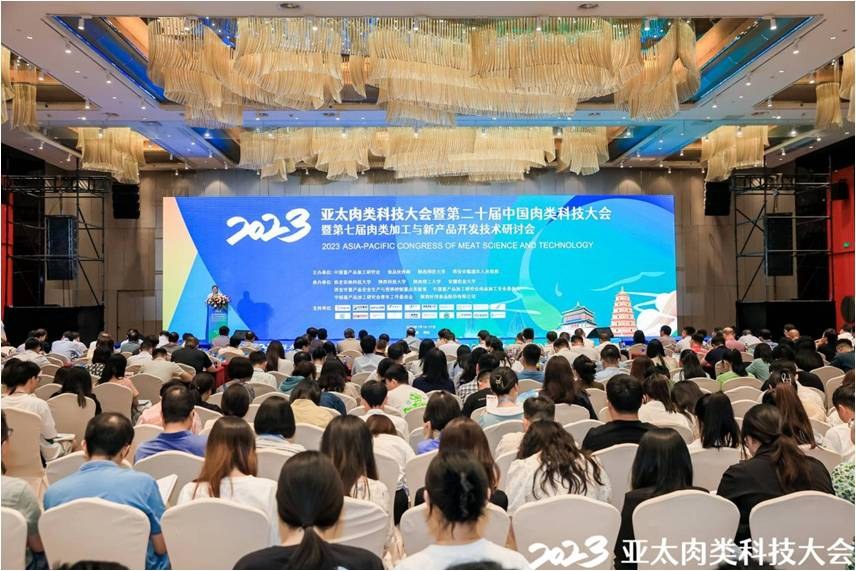
The 2023 Asia-Pacific Meat Science and Technology Conference, held jointly with the 20th China Meat Science and Technology Conference, took place from July 19 to 21, 2023, in Xi’an, China. The conference brought together more than 1,000 researchers, industry professionals, and representatives from universities, research institutions, and meat processing companies to exchange recent scientific advances and technological innovations in meat science.
The conference featured presentations and discussions covering meat quality and safety, processing technologies, nutrition, and sustainable development of the meat industry. Prof. Haizhou Wu, Director of AI-Meat Lab, was invited to deliver a scientific presentation entitled “Mechanisms and Inhibition of Hemoglobin-Induced Lipid Oxidation in Meat”, highlighting his research on the molecular mechanisms of lipid oxidation and its control using natural antioxidants.
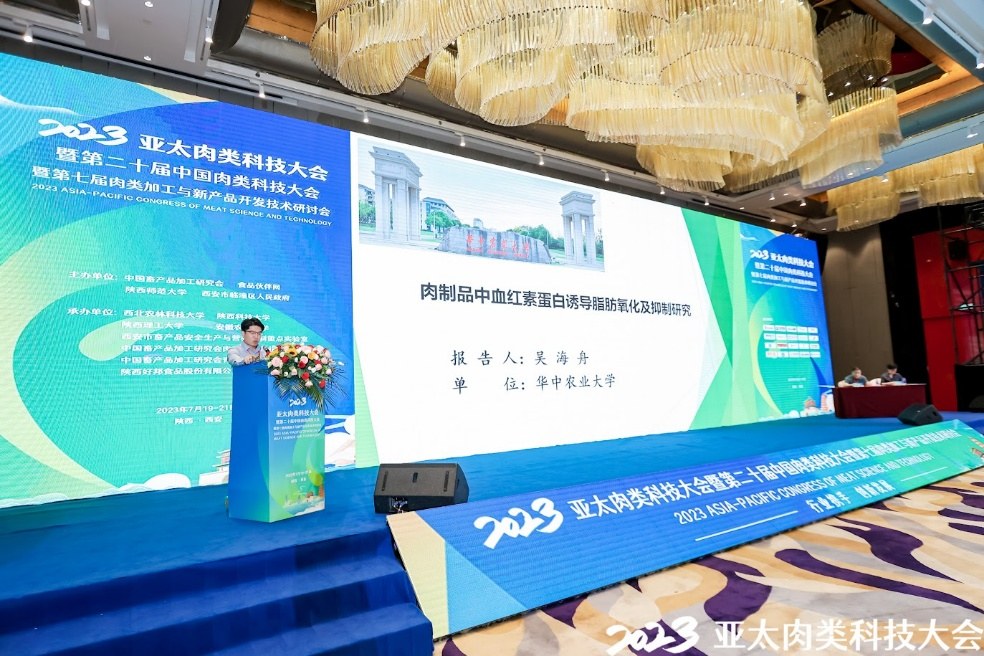
Lipid oxidation is one of the major causes of quality deterioration in meat and meat products, negatively affecting color, flavor, nutritional value, and shelf life. By establishing model systems for lipid oxidation, Prof. Wu and his collaborators systematically investigated the relationships between the pro-oxidative properties of hemoglobin, its three-dimensional molecular structure, and critical amino acid residues. Their findings identified hemoglobin autoxidation and heme release as two key steps driving lipid oxidation, providing new molecular insights into oxidative deterioration in meat systems.
Building on these findings, the research further explored how naturally occurring plant polyphenols regulate the pro-oxidative activity of hemoglobin. Polyphenolic compounds, including quercetin and carnosol, associated with plant sources such as cranberry, rosemary, and bilberry, were investigated for their ability to interact with and covalently modify hemoglobin. These interactions were found to reduce its pro-oxidative activity by influencing hemoglobin autoxidation and heme release. The findings revealed a potential new mechanism by which natural polyphenols inhibit hemoglobin-induced lipid oxidation, offering a scientific basis for the targeted selection of natural antioxidants and the development of effective meat preservation strategies.
The presentation highlighted the group’s research on the molecular mechanisms of meat quality deterioration and the regulation of oxidative processes by natural bioactive compounds. It also provided an opportunity to exchange scientific ideas with researchers and industry professionals working in meat science and technology.
Looking ahead, AI-Meat Lab will continue investigating the molecular mechanisms underlying meat quality deterioration and developing targeted approaches for quality preservation. By integrating fundamental research with innovative preservation technologies, the group aims to contribute to improved meat quality, safety, and shelf life.


Leave a Reply