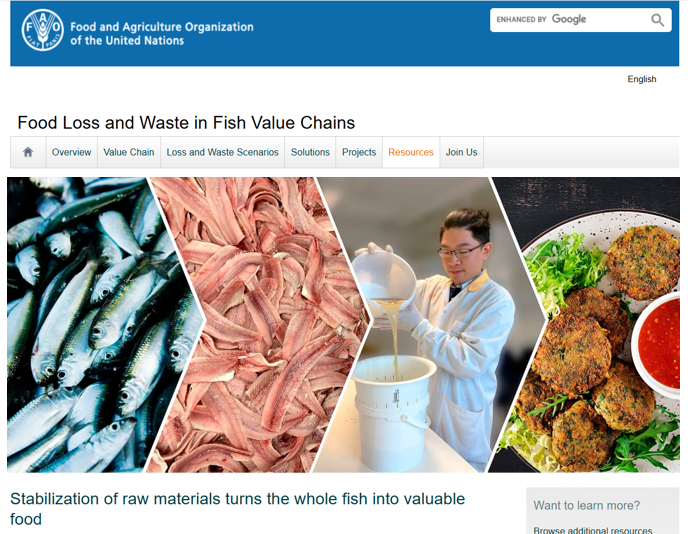
The Food and Agriculture Organization of the United Nations (FAO) has featured innovative research led by Prof. Haizhou Wu of Huazhong Agricultural University (HZAU), in collaboration with scientists from Chalmers University of Technology, Sweden. The research focuses on transforming fish processing by-products into high-quality food ingredients, reducing food waste, and promoting sustainable food production.
Prof. Wu and his collaborators developed an integrated technology combining automated sorting, antioxidant stabilization, and high-value utilization of fish processing by-products. The technology addresses major challenges in the seafood industry, particularly rapid lipid oxidation and the limited utilization of nutrient-rich processing by-products.
The technology significantly improved the oxidative stability and preservation of herring processing by-products, extending refrigerated shelf life from 1 to 12 days and frozen shelf life from 1 to 6 months. It also enables the production of high-quality fish meat and protein ingredients for human consumption.
Importantly, the technology has been successfully implemented at Sweden Pelagic AB, one of Sweden’s leading herring processing companies. According to the university’s report, its industrial application generates approximately 200–300 tonnes of additional high-value fish products annually, contributing an estimated SEK 20 million in additional annual revenue.
This achievement highlights the successful translation of scientific research into industrial applications and demonstrates the potential of innovative preservation technologies to improve resource efficiency and sustainability in the global food industry.


Leave a Reply